The Materials Behind a Bed That Lasts: Steel, Board, Coatings and Hardware
 Structural Engineering·May 28, 2026·24 min read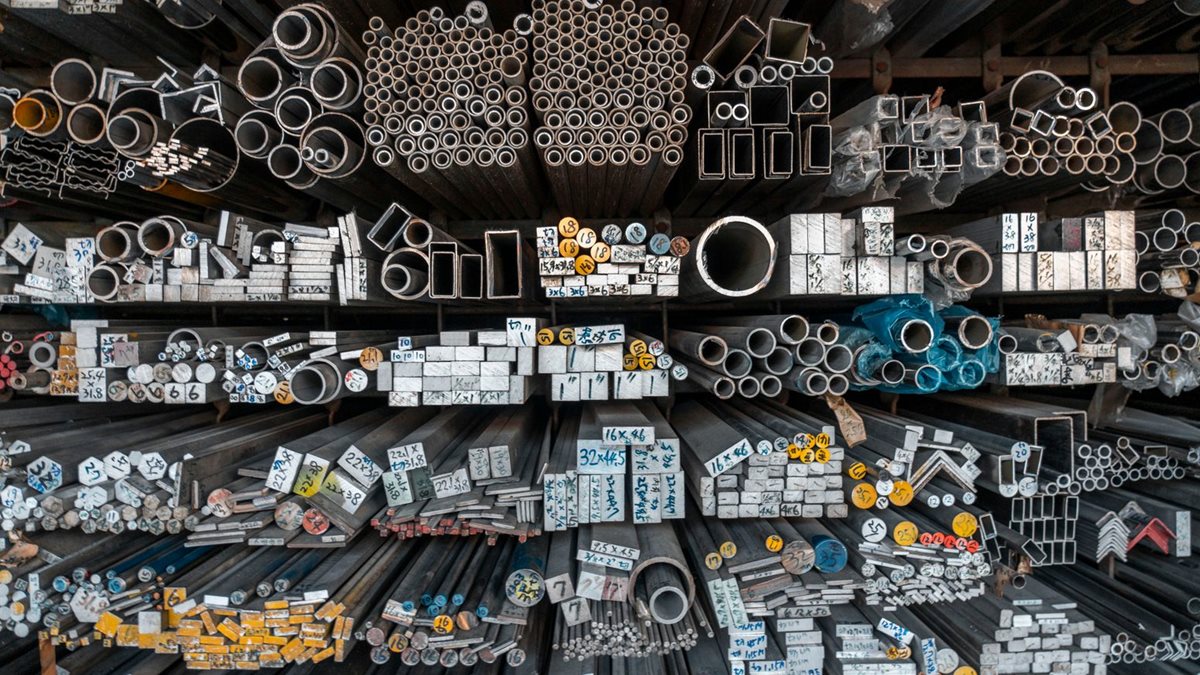
When people ask me what my job is, the shortest honest answer is that I argue about materials for a living. I am the structural engineer at DICTAC, which means that before a bed ever reaches production I am the person deciding what gauge of steel goes into it, what board the drawers are cut from, which glides can be trusted for ten years and which cannot, and, often, telling a designer that the beautiful thing they have drawn will not survive a real bedroom without a heavier tube here and a better fastener there.
Material choices are where furniture is quietly won or lost. Two beds can look identical in a photograph and be built from completely different stuff, and the difference will not show up until one of them starts to sag, creak, chip or wobble a year or two after the sale. Here is, in plain language, what furniture is actually made of: steel, board, coatings, fasteners, glides, foam and the electrical parts. My goal is that by the end you can read a product page, ours or anyone's — and know which words mean something and which are decoration.
Steel: gauge is the number that matters, not the marketing
Start with the bones. On any load-bearing frame, a bed, a bunk, a loft, the steel is what actually carries you, so it is the first thing I specify and the first place a cost-cutting factory economises. The word to know is gauge: the wall thickness of the steel tube. It is counter-intuitive, because in the gauge system a lower number means thicker steel. Sixteen-gauge tube is thicker and stronger than eighteen-gauge, which is thicker than twenty. The difference between them is fractions of a millimetre and it is completely invisible once the frame is coated and assembled. Hence it is such a tempting corner to cut.
That fraction of a millimetre is the whole game, though. It is the difference between a frame that feels planted when you sit on the edge and one that has a faint give, between a bunk you are happy to put two children on and one you quietly worry about, between a weight rating that came from a load test and one that came from a hopeful copywriter. When we say a frame is heavy-duty, we mean a specific gauge that we measure on intake and reject if it comes in under spec. A brand that will not tell you anything about its steel beyond "sturdy metal" is a brand asking you to trust a number with nothing behind it.
There is also the question of tube shape and how the frame is braced. A well-engineered frame uses the geometry, cross-braces, the right joints in the right places, so that the steel is working efficiently and does not need to be needlessly heavy. Good engineering can make a lighter frame stronger than a heavier but thoughtlessly designed one. But there is a floor below which you simply cannot go, and cheap furniture lives below it. You feel the result as flex and, over time, as the racking and creaking I described in our walkthrough of how these frames are made.
Gauge is invisible the moment the frame is coated. That’s precisely why it’s the first thing a cost-cutting factory thins down and the first thing a serious one refuses to.Karen Wells, Structural Engineering
| Steel gauge | Relative wall thickness | Typical use | What you feel |
|---|---|---|---|
| 16 gauge | Thickest / strongest | Heavy load frames, bunk main posts | Planted, no give under load |
| 18 gauge | Medium | General frame members | Solid for normal use |
| 20 gauge | Thinner | Non-structural parts, light frames | Fine light-duty; flex if load-bearing |
| 22+ gauge | Thin | Cheap frames pushing a price | Noticeable flex, early loosening |
Engineered board: not all “wood” is the same word
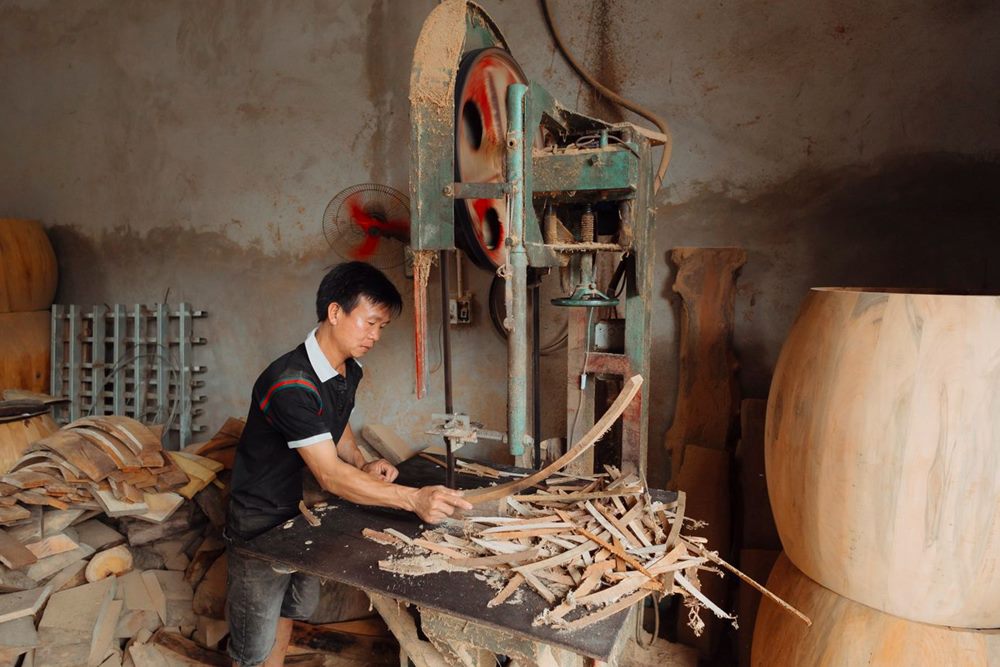
Very little modern furniture is solid timber, and that is not the scandal people sometimes assume. Engineered board, board made from processed wood fibre, is dimensionally stable, uses timber efficiently, and when it is the right type and properly finished it is an excellent material for drawer fronts, shelves and panels. The problem is that "wood" on a listing can mean several very different materials, and the gap between the best and worst of them is enormous.
The cheapest is particle board: wood chips pressed with resin. It is inexpensive and fine for lightly loaded, static parts, but it has poor screw retention, screws strip out if a joint is stressed or reassembled, and it sags under a sustained load and swells if it ever gets damp. Next is MDF (medium-density fibreboard): finer fibres pressed to a denser, smoother board. MDF machines cleanly, takes a finish beautifully, and is far more consistent than particle board. It is why it is a workhorse for drawer fronts and panels. At the top is plywood: thin veneers of real wood glued in alternating grain directions, which makes it strong, light and excellent at holding a screw, and more expensive, so it appears where its strength earns its cost.
Two things matter more than which board is used, though. The first is edge-banding: whether the raw cut edges are sealed with a bonded strip. An unbanded board edge chips on the first knock and drinks up moisture; a banded edge is protected and smooth. Run your thumb around any drawer front: sealed and smooth is a good sign, bare and slightly rough is a warning. The second is emissions: board is bonded with resins that can off-gas, and the board worth buying meets low formaldehyde-emission standards, which is the thing you are quietly trusting when a piece of furniture lives in a child's bedroom. We use board chosen for both — a finish and density that lasts, and emission standards that belong in a home.
| Board type | Made from | Strength / screw hold | Best used for |
|---|---|---|---|
| Particle board | Coarse chips + resin | Low; strips under stress | Light, static panels |
| MDF | Fine fibres, dense press | Medium; machines cleanly | Drawer fronts, panels, shelves |
| Plywood | Cross-laminated veneers | High; holds screws well | Load-bearing panels, structure |
| Solid timber | Sawn wood | High but moves with humidity | Show surfaces, premium frames |
Coatings: the thin layer that decides how a frame ages
Steel has to be coated, both to look right and to resist corrosion and wear, and the coating is one of the clearest quality tells because it fails so visibly when it is done cheaply. There are three broad approaches, and the gap between the best and worst is the difference between a frame that looks new after five years and one that is chipping at the corners after twelve months.
Powder-coating is the one you want. A dry powder is given an electrostatic charge so it clings evenly to every surface, including the inner corners a spray gun struggles to reach, and the frame is then oven-cured so the powder melts into a hard, continuous shell bonded to the metal. It resists chips and scratches far better than paint, which matters most on the parts touched every day: ladder rungs, guardrails, drawer edges. But, and this is the part nobody advertises, powder-coating is only as good as the surface preparation beneath it. If the steel was not properly degreased and cleaned first, the coat has nothing to bond to and will flake regardless of how good the powder is. The invisible prep step is where a coating job is really made or ruined.
Wet paint is cheaper and looks fine leaving the factory, but it is a softer, thinner film that chips at edges and shows wear within a year or two of real use. Bare or lightly plated steel is fine short-term indoors but can mark and, in a humid room, eventually corrode. On our frames the finish is a cured powder-coat over properly prepped steel, because the finish is not cosmetic. It is the part of the frame your hands are in contact with more than any other.
People think the coating is about colour. It’s about the ten thousand times a year someone’s hand lands on the same guardrail. Colour is the easy part; durability is the point.Karen Wells, Structural Engineering
Fasteners and joints: how the pieces are actually held together
A frame is only as good as its connections, and there are a few very different ways to join furniture, each with a place and a failure mode. Understanding them tells you a lot about how a piece will age.
The strongest joint is a weld. Two pieces of steel fused into one. A welded joint has no fastener to loosen; it either holds or, if it was done badly, it cracks. On our frames the load-bearing joints are welded and inspected by hand, because that is the connection that carries you. Then there are bolts: mechanical fasteners that the customer tightens on assembly. Bolts are strong and, crucially, serviceable. You can re-torque them as a frame settles. That is the reason a bolted structural connection stays tight for years if you maintain it. The weakness of bolts is neglect: a bolt nobody ever re-tightens slowly creeps loose, and that is the origin of most creaks.
Then there is the cam lock — the round disc-and-pin fastener that holds most flat-pack board furniture together. Cam locks are quick and tool-light and perfectly fine for lightly loaded board joints like a drawer box. Their weakness is that they do not love being taken apart and rebuilt, and they rely on the board around them holding the pin, which brings us back to why the board type matters. A cam lock in dense MDF is solid; a cam lock in crumbly particle board is a joint waiting to strip. The grade of the bolts matters too: fasteners carry a strength grade, and an under-grade bolt in a load-bearing spot can shear. It is not a glamorous detail, but it is the kind of thing I lose arguments about winning, because it costs pennies and prevents failures.
| Joint type | Strength | Serviceable? | Typical failure |
|---|---|---|---|
| Weld | Highest | No (permanent) | Cracks if poorly done |
| Bolt | High | Yes: re-torque | Loosens if never maintained |
| Cam lock | Medium | Limited rebuilds | Strips in weak board |
| Dowel + glue | Low–medium | No | Works loose under stress |
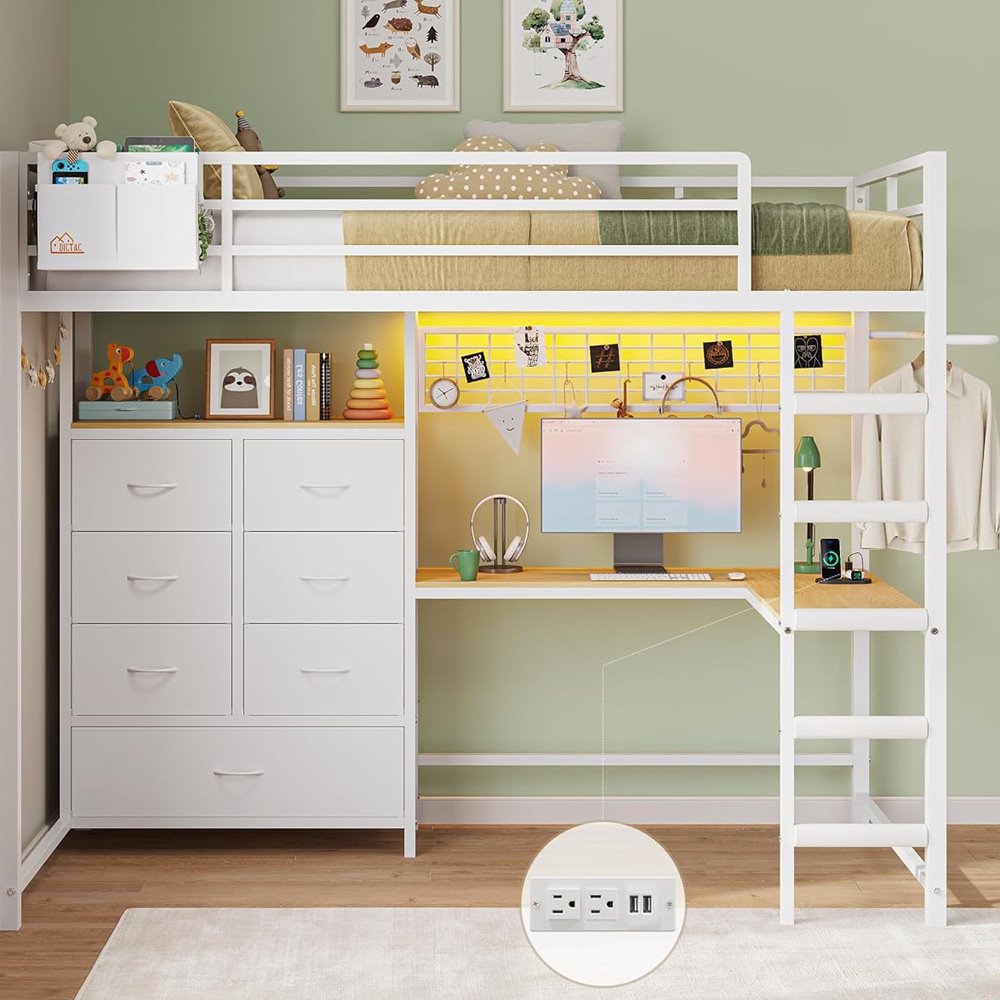
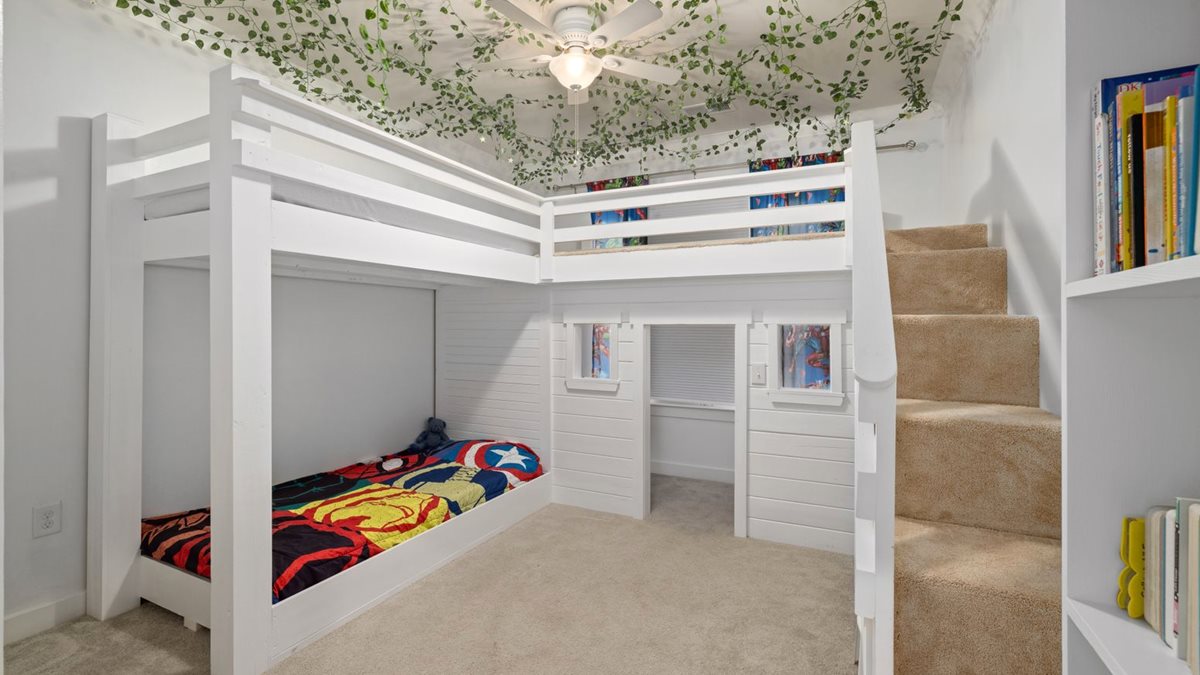
Twin Loft Bed with L-Shaped Desk & 7 Storage Drawers
A frame that shows every material decision at once: welded steel structure, powder-coated finish, MDF drawer fronts on cycle-tested glides, and bolts you can re-torque. This is what “built from the right materials” looks like in one product.
View details & specs →Drawer glides: the small part that generates the most complaints
If I had to name the single component that causes the most post-purchase disappointment relative to its cost, it would be the humble drawer glide. A drawer that rolls smoothly out of the box but drags, tips or falls out of its track a year later is almost always running on glides that were under-specified to shave a dollar off the build. And there is very little a customer can do to fix a genuinely cheap glide after the fact, which makes this a decision that has to be right at the design stage.
Glides are rated in cycles: how many open-and-close movements they are built to survive. A good glide is rated for tens of thousands of cycles and stays smooth to the end of that life; a poor one is not rated at all, because nobody tested it. We cycle-test glides on a rig before a design is approved, opening and closing them thousands of times to see how they behave when the novelty has worn off. The best glides also have features that matter in real use: a soft-close damper so a slammed drawer does not bang, a stop so the drawer cannot be pulled all the way out onto a foot, and full extension so you can actually reach the back. Those are not luxuries on a storage bed that a family uses every day; they are the difference between storage you use and storage you fight.
Upholstery and foam: where comfort meets safety
On headboards and on the guardrails of kids' beds, upholstery is doing two jobs, and the second one is safety. A padded headboard is comfort — something to lean against to read. But an upholstered guardrail on a child's bed is a safety component: the whole point of wrapping a steel rail in padded fabric is that a knee or elbow meets something soft instead of a hard edge. That means the foam density and the fabric's abrasion resistance are not decoration; they are the feature working.
The things that separate good upholstery from bad are mostly invisible until they wear. Foam that is too soft or too thin compresses permanently and stops protecting; a fabric with low abrasion resistance pills and wears through at the corners where hands and sleeves rub. A skin-friendly fabric matters because it is in daily contact with a sleeper. And it should be cleanable, because it lives on a bed. When we choose a linen or velvet for a frame, the look is the easy part of the decision; the harder part is whether it will still be doing its job — comfort and protection, after two years of a real child using it as intended and as not intended.
LED strips and charging: the parts that should be boring
More and more of our frames build in LED lighting and USB charging, because a teenager's bed is also their desk, their reading nook and their phone's overnight home. These are genuinely useful features, but they introduce a category of component, electrical, where the quality question is really a safety and longevity question, and where standardisation matters more than novelty.
The right way to build in electrical parts is to use components that carry the proper safety marks, run at safe low voltages, and, this is the part that pays off years later, are standardised across the range. When every frame we make uses the same family of LED strips and charging modules, we know exactly how they behave, we can test them thoroughly once rather than superficially many times, and if one ever fails we can send a replacement part instead of asking someone to throw away an entire bed. A frame that uses some unique, unrepeatable electronics module is a frame that becomes unfixable the moment that module is discontinued. Boring, standardised, replaceable electrical parts are a feature, even though no marketing team ever gets excited about them. Our platform beds with RGB lighting use exactly this approach: app or remote control over the colour, but built on components we can support for the life of the bed.
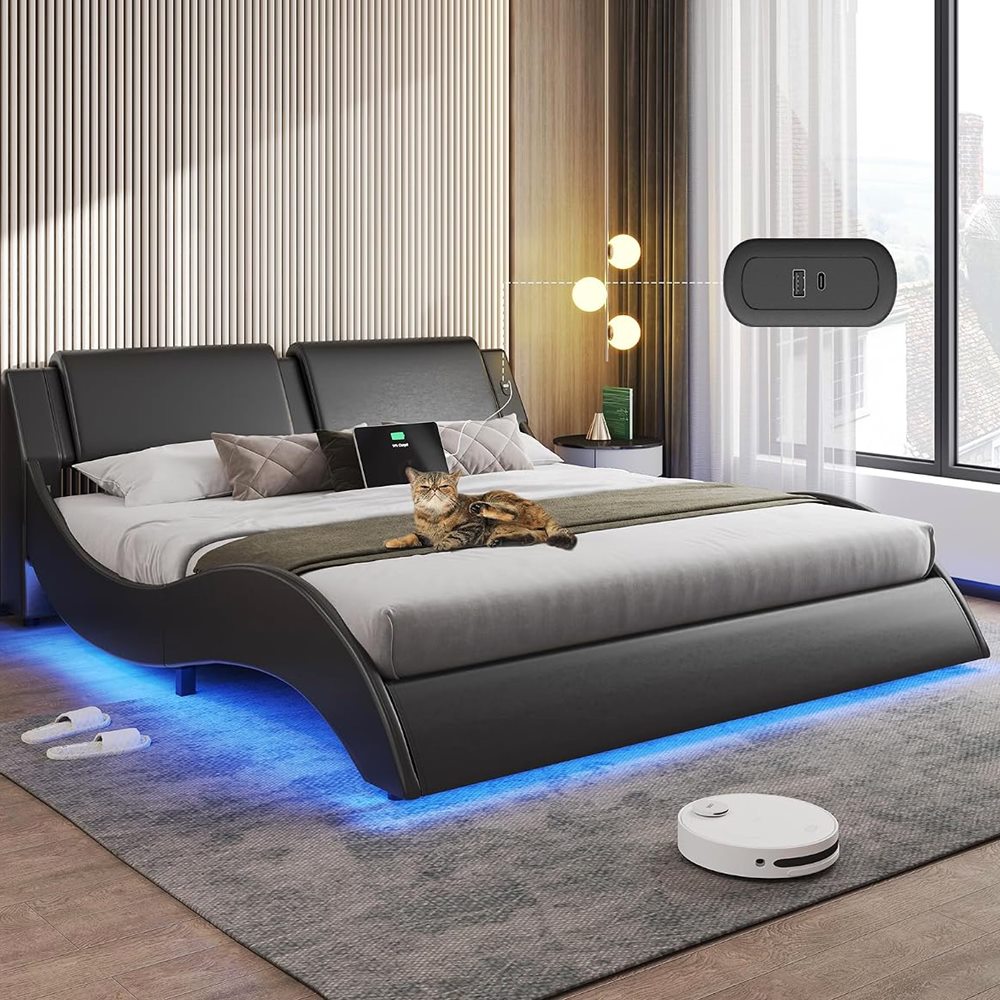
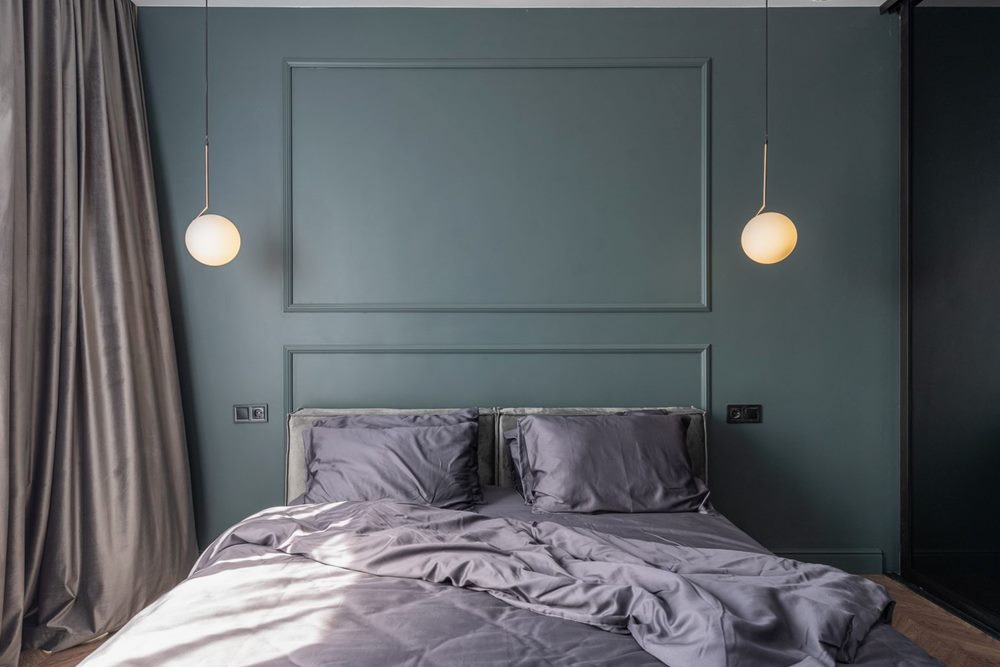
Queen Platform Bed with RGB LED & Wave Headboard
RGB lighting done the boring, right way: standardised, safety-marked components under app and remote control, on a frame engineered to the material standards in this guide. The lights are the fun part; the engineering underneath is why they’ll still work in five years.
View details & specs →The hardware and extras that quietly decide daily comfort
Beyond the big five materials, there is a layer of smaller components that never make the headline of a product page but shape how furniture feels to live with every day. They are worth a section because they are cheap to get right, cheap to get wrong, and the difference is entirely in the daily experience rather than the showroom photo.
Take the humble anti-tip kit: a bracket and a strap that anchor a tall piece to the wall. It costs pennies and prevents the single most serious furniture accident there is. It is why we include one with every loft and tall unit rather than treating it as an optional extra. Or take cable management on frames with built-in charging and lighting. A few well-placed clips and channels are the difference between a tidy desk and a nest of wires, and they cost almost nothing to design in. Soft-close dampers on drawers, stops that keep a drawer from being pulled onto a foot, felt pads under contact points, the quality of the Allen key in the box: none of these are glamorous, and all of them are felt every single day. A maker who gets the small hardware right is usually a maker who got the big decisions right too, because the same care runs through both. When you are comparing two frames that look identical on the big specs, the small hardware is often the tie-breaker, and it rewards a close look at the photos and the parts list.
| Small component | What it does | Cost to include | Felt how often |
|---|---|---|---|
| Anti-tip kit | Prevents a tall piece tipping | Pennies | Rarely, but critically |
| Soft-close damper | Stops drawers slamming | Low | Every drawer, every day |
| Cable management | Keeps built-in wiring tidy | Very low | Every time you look at the desk |
| Drawer stop | Prevents pull-out onto a foot | Negligible | Occasionally, painfully if absent |
Five material myths worth unlearning
Because materials are technical and mostly invisible, a lot of folk wisdom has grown up around furniture that is either wrong or too simple to be useful. Here are five I hear constantly, and what is actually true.
"Metal frames are cold and industrial." This confuses the structure with the finish. A steel frame can be wrapped in upholstery, paired with warm-toned board, and lit softly. The metal is the skeleton, not the look. What steel buys you is a frame that holds its shape for a decade, which is a very warm feeling at two in the morning when a bed does not creak.
"Solid wood is always best." Solid timber is lovely and it also moves with humidity, can crack, warps if it dries unevenly, and is heavy and expensive to ship. Engineered board is dimensionally stable and, in the form of dense MDF or plywood, entirely appropriate for the parts it is used on. Best is the right material in the right place, not one material everywhere.
"Heavier furniture is better furniture." Weight is a crude proxy. A thoughtfully engineered frame can be lighter and stronger than a heavy but badly braced one, because good geometry does more than raw mass. Weight only tells you there is a lot of material; it does not tell you the material is in the places that carry load.
"If it looks solid in the showroom, it is solid." The showroom is exactly where the weakest furniture looks its best, because every failure mode described in this guide takes months of real use to appear. Chips, sag, creak and drawer drag are time-based, not showroom-based. This is the single most expensive myth on the list.
"A big weight rating proves strength." Only if it was tested. An untested "1,000 lbs" is a number someone typed. A specific, slightly modest, tested rating from a maker who also talks about steel gauge and welds is worth far more than a huge round number from a maker who says nothing else. We covered why in the production walkthrough, and it bears repeating because it catches so many buyers.
Best is the right material in the right place: not solid wood everywhere, not the heaviest frame on the shelf. Furniture is a set of deliberate trade-offs, and the good makers are the ones who’ll tell you what they traded.Karen Wells, Structural Engineering
Material trade-offs, product type by product type
Materials are not chosen in the abstract; they are chosen for a job. It is worth walking through how the priorities shift across the kinds of furniture we make, because it shows why there is no single "best" spec: only the best spec for what the piece has to do.
On a bunk bed, the priority order is unambiguous: structure first, structure second, structure third. Two sleepers and a climbing child put both static and dynamic loads through the frame, so the steel gauge and the welds dominate every other decision. The board, glides and finish still matter, but they are chosen after the frame has been engineered to carry people safely, with guardrails and anti-tip hardware treated as non-negotiable standard fit.
On a loft bed, structure is still paramount because someone sleeps at height, but the storage integration comes a very close second. This is furniture whose entire reason to exist is that the space under the sleeping platform works hard. So the glides, the drawer board and the desk surface get as much engineering attention as they would on a standalone desk, because a loft bed with a wobbly desk or drawers that jam has failed at its actual purpose even if the frame is bombproof.
On a platform bed, the load case is gentler, one level, no climbing, so the emphasis shifts toward the surfaces you see and touch: the upholstered headboard, the finish, the integrated lighting and charging, the under-bed drawer glides. The steel still has to be right, but the material budget can move toward the things that make a main bedroom feel considered. On storage pieces the priorities shift again, toward board quality, edge-banding and glides, because a bookcase or dresser lives or dies on whether its drawers and shelves stay true under load. And on kids' beds, safety materials move to the very top: foam density in the guardrails, rounded and tested edges, and non-toxic, low-emission board and finishes, because the piece is used, and misused, by the people we most need to protect.
| Piece | Top material priority | Second priority | Why |
|---|---|---|---|
| Bunk bed | Steel gauge + welds | Guardrail safety | Two sleepers, climbing loads |
| Loft bed | Frame structure | Storage / desk quality | Sleep at height + hard-working under-space |
| Platform bed | Frame + surfaces | Upholstery, lighting | Gentle load, main-bedroom finish |
| Storage | Board + glides | Edge-banding | Lives on drawers and shelves staying true |
| Kids’ bed | Safety materials | Durable finish | Used and misused by children |
How to read a product page like an engineer
Put all of this together and you have a way of reading any furniture listing that cuts through the marketing. You are looking for specifics, because specifics come from testing and vagueness comes from copywriting. Here is the checklist I would use if I were buying furniture from a company I did not work for.
- Does it name the steel? A gauge, a "heavy-duty" claim backed by a weight rating from a test, good. "Sturdy metal frame" and nothing else, a shrug.
- What board, and is it edge-banded? MDF or plywood with sealed edges beats unnamed board every time. Low-emission board is the mark of a maker thinking about your home.
- Powder-coated or painted? Powder-coat is the durable answer. If the finish is not mentioned, assume the cheaper one.
- How is it joined? Welded load points plus serviceable bolts is the strong combination. All-cam-lock construction is fine for storage, weaker for structure.
- Are the glides described? Full-extension, soft-close, a stated cycle rating, someone who tested. Silence — someone who did not.
- Are safety parts standard? Guardrails and anti-tip kits included, not upsold, signal a maker confident in the whole build.
| Marketing phrase | What it often really means | What to look for instead |
|---|---|---|
| “Sturdy metal frame” | Unspecified, possibly thin gauge | A named gauge or a tested weight rating |
| “Solid wood construction” | May be particle board with veneer | Named board type + edge-banding |
| “Premium finish” | Could be thin wet paint | The words “powder-coated” |
| “Easy assembly” | No guarantee holes line up | Jig-drilled, numbered hardware, test-built |
| “Holds up to 1,000 lbs” | Often untested spreadsheet number | A specific, credible, tested figure |
How each material ages, and the maintenance that doubles its life
Materials are not static; they age, and how they age is part of the buying decision. The good news is that the maintenance which keeps them young is trivial, a few minutes a couple of times a year, and understanding it tells you a lot about which materials are worth paying for.
Powder-coated steel ages extremely well: it does not fade, rust or dull under normal indoor use, and the only real enemy is a hard impact that breaks the coating. Wipe it with a damp cloth, avoid harsh solvents that could dull the finish, and it will look the same in ten years as it does now. Engineered board ages well if it stays dry and its edges are sealed; the things that age it prematurely are moisture reaching an unbanded edge and sustained overloading that makes a shelf sag. Keep it dry, do not exceed the shelf ratings, and dense board holds its shape for the life of the piece.
The parts that genuinely wear are the moving and contact ones: glides, hinges, upholstery and bolted joints. Glides last far longer with an occasional wipe of the track and, if they start to drag, a touch of dry lubricant. Upholstery lasts longer if it is a cleanable fabric that you actually clean before grime becomes abrasion. And bolted joints, the single most impactful maintenance on any bed — stay tight if you re-torque them after the first week and once or twice a year thereafter, because a new frame settles and a slightly loose bolt is the seed of every creak. None of this is difficult; all of it roughly doubles the useful life of the materials. We spell out the full routine on our assembly and care page, and it applies to any well-made frame, not just ours.
| Material | How it ages | Maintenance that extends its life |
|---|---|---|
| Powder-coated steel | Barely: resists fade and rust | Wipe with damp cloth; avoid impacts and solvents |
| Engineered board | Well if kept dry & unbent | Keep dry; respect shelf load limits |
| Drawer glides | Wear with use | Wipe track; dry lubricant if dragging |
| Upholstery | Wears at contact points | Use a cleanable fabric; clean before grime abrades |
| Bolted joints | Creep loose over time | Re-torque after week one, then twice a year |
Frequently asked questions
Is MDF “cheap” furniture?
No. That is a common misconception. MDF is a genuinely good material for drawer fronts, panels and shelves: it is dense, stable, machines cleanly and takes a finish well. The cheap material is loose particle board, which is a different thing. Well-made furniture uses MDF or plywood where each makes sense, with steel doing the structural work. Judge a piece by whether the right material is in the right place, not by whether the word "engineered" appears.
How can I tell the steel gauge if the listing doesn’t say?
You often cannot know the exact gauge without the spec, which is itself informative: a maker proud of its steel usually mentions it. As a proxy, look at the weight rating (specific and credible, not a suspiciously round huge number), read whether the brand talks about testing, and, if you can handle the frame, feel for flex when you press on it. Silence about the steel is not proof of thin steel, but it is not reassurance either.
Does powder-coating ever chip?
Any finish can be damaged by a hard enough impact, but a properly cured powder-coat over well-prepped steel resists everyday chips and scratches far better than paint, and it does not spontaneously flake at the corners the way a cheap painted finish does in its first year. If a powder-coated frame is chipping easily, the failure is almost always in the surface preparation beneath the coat, not the powder itself.
Why do my drawers matter so much for judging quality?
Because drawers concentrate several material decisions in one place you interact with daily: the board they are cut from, the edge-banding, the glides they run on, and the joints of the drawer box. A drawer that is smooth, quiet, sealed at the edges and solid in the corners is a small, honest sample of the whole product's quality. It is the first thing I open on any piece of furniture.
Where do I see what DICTAC uses?
Each product page lists the frame material, board, finish and included features for that specific piece. Browse the full range or a category: loft, bunk, corner, platform, kids', storage — and you will see the specifics this guide taught you to read. More on our approach is on the about page.
Karen Wells
Structural Engineering · DICTACPart of the team behind DICTAC’s space-saving beds and storage. Read more about how we work, or browse the full range.