Loft, Bunk, Corner or Platform: Which Bed Frame Fits Your Room?
 Head of Design·June 11, 2026·23 min read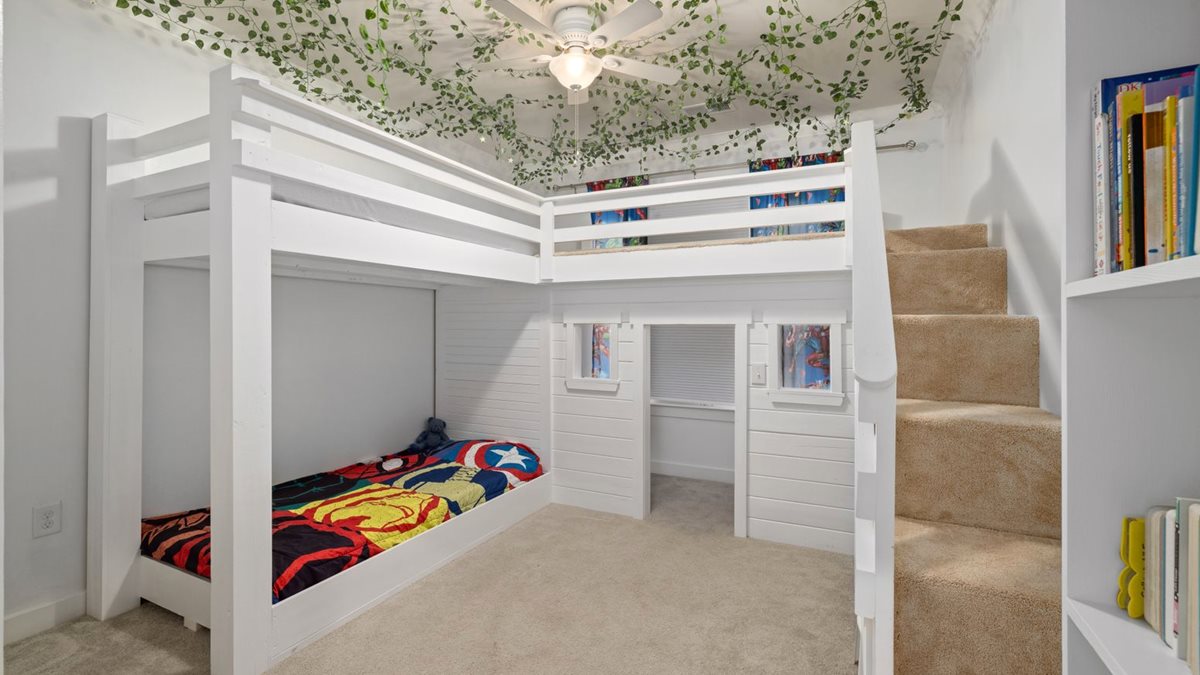
Almost every bed we design at DICTAC exists to answer one question: what do you do when there is not enough floor? A room has to be a bedroom, and often also a study, a wardrobe and a place to actually stand up, and the bed is the single largest object competing for the space. Over the years we have arrived at four broad answers to that problem, loft beds, bunk beds, corner beds and platform beds, and the most common question we get from customers is simply which one is right for them.
This is my attempt at an honest, head-to-head answer. I lead design here, which means I have a favourite for every situation but no favourite overall, because the right bed genuinely depends on the room, the sleeper and the problem you are trying to solve. I am going to walk through each type, how it works, who it suits, and just as importantly where it falls down — and then give you a set of decision tools to match a type to your own situation. By the end you should be able to rule out two or three of the four quickly and choose between what is left with confidence.
Loft beds: lift the mattress, reclaim the floor
A loft bed raises a single sleeping platform up to head height and leaves the entire space beneath it open. That space is the whole point: instead of a mattress eating a third of the floor, you get a full-height zone underneath for a desk, a dresser, shelving, a reading nook, or some combination of all of them. In effect, a loft bed stacks a bedroom and a study in the footprint of a bed. It is the most floor-efficient thing we make.
Who it suits: teenagers, students and single adults in small rooms, studios and dorms: anyone who needs a bed and a workspace but only has the floor for one. A loft bed is transformative in exactly the room that feels impossible: the ten-by-ten box where a bed and a desk cannot both fit on the floor. Put the bed in the air and suddenly they can. Our loft beds lean into this by building the under-space out fully, an L-shaped desk with seven drawers, a coat rack and shelving, or a gaming desk, so the reclaimed floor is not just empty, it is furnished.
Where it falls down: height and age. A loft bed needs ceiling clearance: you have to be able to sit up in the raised bed without meeting the ceiling, which rules it out in rooms with low ceilings. It involves a ladder or stairs, so it is not right for very young children or for anyone who does not want to climb into bed. And making the bed up in the air is more awkward than a bed you can walk around. None of these are dealbreakers for the right person; all of them are dealbreakers for the wrong one.
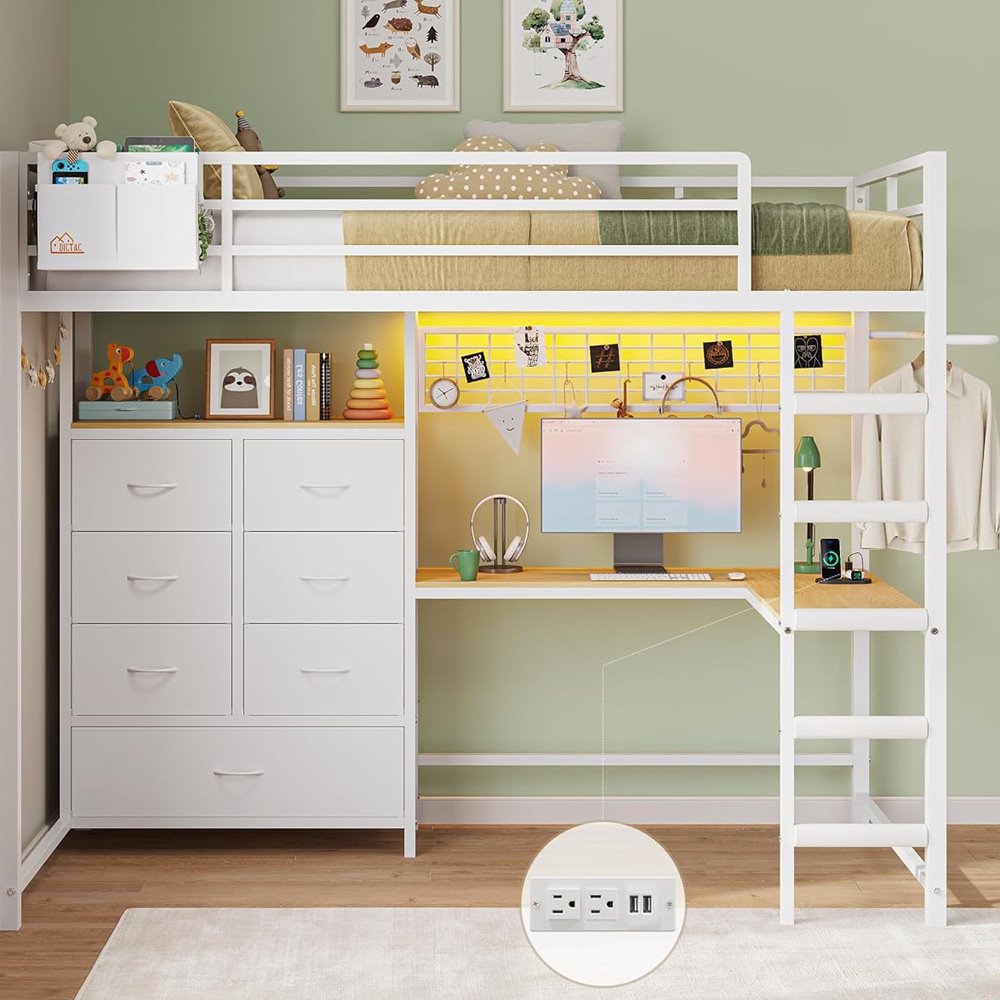
Twin Loft Bed with L-Shaped Desk & 7 Storage Drawers
The clearest expression of the loft idea: a twin sleeping platform up top, and a whole L-shaped workstation with seven drawers, a shelf, an LED strip and a charging station in the reclaimed space below.
View details & specs →Bunk beds: two sleepers, one footprint
A bunk bed solves a different version of the same problem. Instead of lifting one bed to free the floor, it stacks two beds vertically so that two people sleep in the floor area of one. If a loft bed is about reclaiming floor for function, a bunk is about reclaiming floor for a second sleeper. For any family with two children sharing a room, it is very often the only thing that makes the room work at all.
Who it suits: siblings sharing a bedroom, guest rooms that occasionally need to sleep two, holiday homes, and any situation where you need two beds and have the floor for one. The modern bunk has also grown up: our twin-XL-over-twin bunk with an L-shaped desk folds a workspace into the design, and staircase versions like the low bunk with a storage staircase turn the climb itself into storage. So a bunk today is often two beds and a desk or a wall of drawers, not just two beds.
Where it falls down: the top bunk is not for everyone. Very young children should not sleep on the top, and there is a real safety dimension: guardrails and a solid ladder are not optional. Hence we include full-length guardrails and anti-tip hardware as standard rather than extras. Bunks also need ceiling height for the top sleeper to sit up comfortably, and the top bunk is, unavoidably, more of a production to make up. The pay-off, fitting two children into a room that can only hold one bed on the floor, is usually worth every one of those trade-offs.
A loft bed reclaims floor for function; a bunk reclaims it for a second person. Deciding which problem you actually have is ninety per cent of the choice.Daniel Hu, Head of Design
Corner beds: the specialist that reclaims dead space
The corner bed is the least-known of the four and the one that feels like a revelation when it fits your room. It is an L-shaped frame designed to sit into the corner of a room, using two walls, and it turns the awkward junction that most furniture ignores into something useful. By day, with an upholstered guardrail along the open side, it works as a daybed or a sofa; by night it is a full bed. Underneath and along the L there is room for drawers, shelving and often a desk.
Who it suits: rooms with an awkward layout where a conventional bed wastes a corner, studios and multi-use rooms where the bed needs to double as seating, and teen rooms that want a lounge feel during the day. Our corner twin with a desk, bookcase and nine drawers is close to a whole bedroom in a single corner-shaped unit, and the corner queen scales the idea up for adults. If your room has a corner that never quite works, this is the type designed for exactly that.
Where it falls down: it is a specialist. A corner bed only makes sense if you have the corner and the layout to suit it; in a room where a bed sits naturally against one wall, a corner frame solves a problem you do not have. It is also, by nature, a larger single object than a plain frame, so it wants a bit of room to breathe along both walls. When it fits, nothing else comes close; when it does not, one of the other three will serve you better.
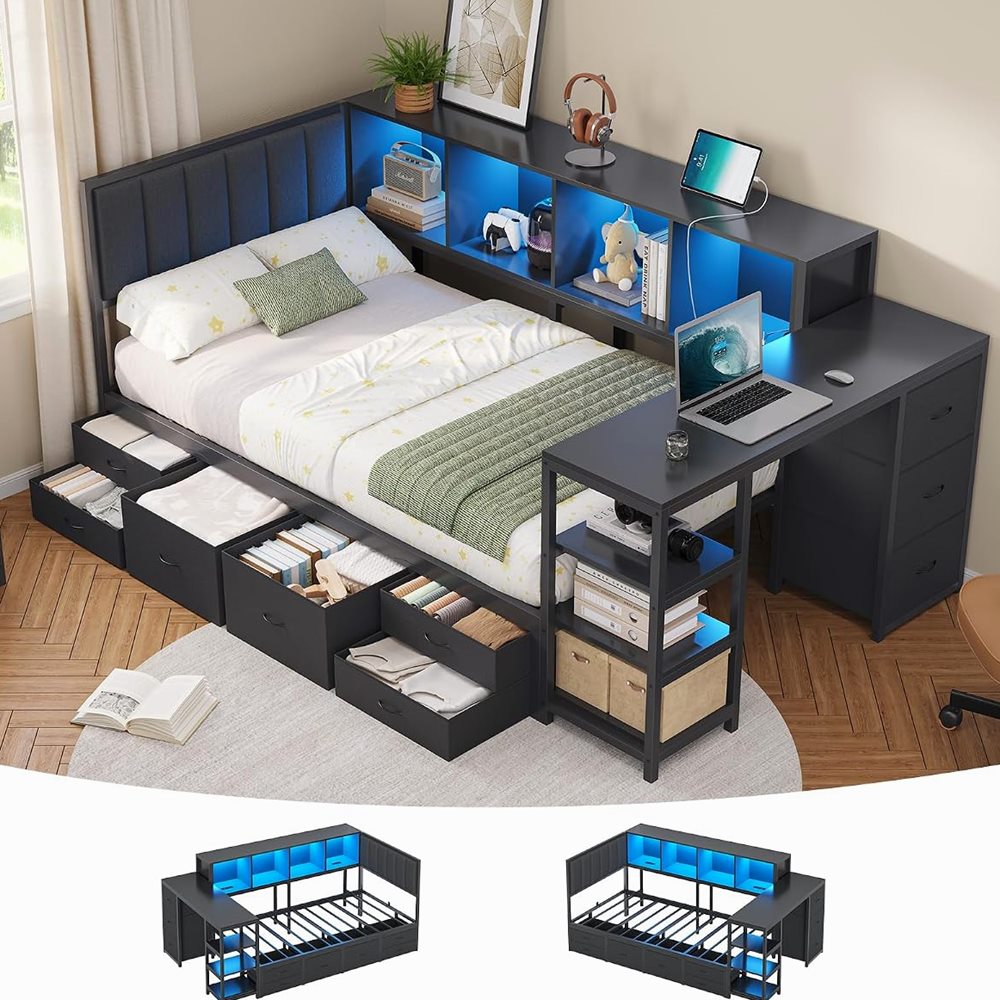
Corner Twin Bed with Desk, Bookcase & 9 Drawers
The corner idea taken to its conclusion: an L-shaped twin that folds a sleeping area, a desk, a bookcase and nine drawers into the corner most rooms waste entirely.
View details & specs →Platform beds: low, simple, and quietly clever underneath
The platform bed is the most conventional of the four and, for a great many people, the right answer. It keeps the mattress low, on a supportive slatted base, with no box spring required, and the cleverness is hidden underneath and in the headboard: under-bed drawers for storage, and increasingly integrated lighting and charging built into the frame itself. It does not reclaim floor the way a loft or bunk does, but it wastes none either, and it asks nothing of the room's height or the sleeper's willingness to climb.
Who it suits: main bedrooms, adults, couples, and anyone who wants a normal, walk-around bed that also stores things and looks considered. A platform bed is the type you choose when the problem is not "there is no floor" but "there is nowhere to put the winter bedding and I would like the bed to look good and charge my phone." Our queen platform with a wave headboard and RGB lighting is the showpiece version; the California King with a storage headboard and four drawers scales it up with serious storage. Because the load case is gentle, this is where we spend the material budget on the surfaces you see and touch.
Where it falls down: it does not multiply your space the way the vertical options do. If your core problem is that a bed and a desk cannot coexist on your floor, a platform bed will not solve it — you need to go vertical with a loft. The platform's honest pitch is different: it is the low-drama, all-ages, main-bedroom choice that stores well and looks good, and for the majority of bedrooms that is exactly the right pitch.
The four types, head to head
Here is the comparison in one place. Read the columns for the dimension you care about most, floor saved, whether children can use it, how much the ceiling matters, and the shortlist tends to reveal itself.
| Type | Floor reclaimed | Ceiling needed | Young kids? | Best for |
|---|---|---|---|---|
| Loft bed | Most (full under-space) | High | No (top sleeper climbs) | Teens/adults needing bed + workspace |
| Bunk bed | High (two in one footprint) | High | Bottom yes, top older only | Siblings sharing a room |
| Corner bed | Medium–high (dead corner) | Standard | Yes (low versions) | Awkward layouts, daybed use |
| Platform bed | None wasted, none gained | Standard | Yes | Main bedrooms, all-ages storage |
There is no best bed, only the best bed for your room, your ceiling and who’s sleeping in it. The luxury is that all four solve real problems: you just have to know which problem is yours.Daniel Hu, Head of Design
Choosing by room and by sleeper
Specifications are one way in; the room and the person are usually a faster one. Let me reframe the whole decision around who is actually going to sleep in the bed, because that tends to cut the four options down to one or two almost instantly.
For a young child (roughly 3–6). Skip the height. A young child should not be on a top bunk or a high loft, so your real choices are a low kids' bed, a low loft with a play space underneath, or a low bunk on the floor with an older sibling above. The priorities are removable guardrails, soft edges and a low centre of gravity. Our Montessori floor bed and low loft with a play space are built for exactly this stage.
For an older child or teen sharing a room. This is bunk territory. Two sleepers, one footprint, and, if they are old enough, a desk folded into the design so both have somewhere to work. A staircase version is worth the extra space it takes if the younger child finds a ladder daunting.
For a teenager with their own small room. This is the loft bed's home turf. A single sleeper who needs a bed and a full workspace in a room too small for both on the floor: lift the bed, furnish underneath, and the room doubles. If they game, the gaming loft with a glass display cabinet was designed with this exact person in mind.
For an adult or couple. Usually a platform bed, unless the room is a genuine studio where a corner bed's daybed function earns its place. The problem here is rarely "no floor for a desk" and usually "storage and a bed that looks right," which is the platform's whole strength.
| Sleeper | Rule out | Look at | Why |
|---|---|---|---|
| Young child (3–6) | High lofts, top bunks | Low kids’ / floor / low-loft beds | Height + climbing risk |
| Kids sharing a room | , | Bunk beds (stair or desk) | Two sleepers, one footprint |
| Teen, own small room | — | Loft beds | Bed + full workspace in one |
| Adult / couple | Loft, bunk | Platform (or corner in a studio) | Storage + finish, no climbing |
Storage compared: how much each type actually swallows
For most people buying a space-saving bed, storage is the quiet second reason after the primary one. It is worth comparing the four types on storage specifically, because they differ more than you would expect, and the difference maps onto how each one uses vertical space.
Loft beds are the storage champions almost by accident: because the entire under-platform volume is freed, you can put a full dresser, a desk with drawers, open shelving and a hanging rail down there. A loft bed does not just add storage, it adds a storage wall. Our loft with a storage staircase and eight drawers is a good example of how much can live under one sleeping platform. Bunk beds vary widely: a plain bunk adds little storage, but a staircase bunk turns every step into a drawer, and desk-bunks fold in shelving and drawers along the lower frame. Corner beds are strong on storage because the L-shape has two runs to work with: drawers under one arm, shelving or a bookcase along the other. Platform beds offer the most accessible storage: under-bed drawers you reach without climbing anything, plus a storage headboard, which for a main bedroom is often the most usable arrangement of all even if the raw volume is lower than a loft.
| Type | Storage volume | Accessibility | Storage style |
|---|---|---|---|
| Loft bed | Highest | Requires bending under | Full dresser + desk + shelves below |
| Bunk bed | Low to high | Varies by version | Staircase drawers, desk shelving |
| Corner bed | High | Good (two runs) | Drawers + bookcase along the L |
| Platform bed | Medium | Best (walk-up drawers) | Under-bed drawers + headboard |
Cost, longevity and the value question
A fair comparison has to talk about money, and specifically about value rather than sticker price, because the cheapest bed and the best-value bed are rarely the same object. The four types occupy roughly similar price territory in our range, but they deliver value in different ways, and the way to think about it is cost per problem solved.
A loft or a corner bed can be the best value in the whole house when you count what it replaces: a loft bed with a built-in desk and drawers is a bed, a desk and a dresser in one purchase and one footprint, so its real comparison is not against a plain bed but against three separate pieces of furniture plus the floor they would need. Measured that way it is often the cheapest way to furnish a small room, not the most expensive. A bunk bed's value is even starker for a family: it is the difference between one bedroom working for two children and needing a bigger, more expensive home. A platform bed's value is subtler. It is a normal bed that also stores and looks considered, so you are paying a small premium over a bare frame for storage and finish you will use daily for a decade.
Longevity is where value is really decided, though, and it is the same across all four types: a frame built to the standard we describe in our production walkthrough and our materials guide should last ten years or more, and a kids' bed is specifically built to survive a childhood and be handed down. A bed that fails in two years is not cheap at any price. When you weigh the four types, weigh them over a decade of use, not over the checkout total — that is the horizon on which a well-made space-saving bed pays for itself several times over.
The honest way to price a loft bed isn’t against a plain bed — it’s against a bed plus a desk plus a dresser plus the floor space all three would need. On that maths it’s often the cheapest option in the room.Daniel Hu, Head of Design
Matching a bed type to your room’s actual dimensions
Before you commit, it helps to think in real dimensions rather than in categories, because the same bed type behaves very differently in a genuinely tiny room versus a merely small one. A few practical guidelines from years of customers telling us what worked.
In a very small room, say around eight to nine square metres, the classic box bedroom, a loft bed is usually the single highest-impact choice, provided the ceiling allows it, because it is the only option that gives you a workspace the floor cannot otherwise hold. In a small-to-medium room shared by two children, a bunk almost always beats two separate beds, and a staircase or desk bunk earns its slightly larger footprint by adding storage or study space the room badly needs. In a room with an awkward shape, a chimney breast, a slanted wall, a corner that swallows usable space, the corner bed is worth a serious look precisely because it is designed to exploit the geometry other beds fight against. And in a normal-sized main bedroom, a platform bed is almost always right; the vertical tricks solve problems you do not have there, and add height and climbing you do not need.
Whatever the room, measure three things before buying: the floor the bed can occupy, the ceiling height (decisive for loft and bunk), and the swing space for any doors, drawers and the ladder. The most common avoidable disappointment is a bed that fits the floor but blocks a door or a drawer once assembled. Every product page gives the assembled dimensions for exactly this check.
Common mistakes people make choosing a bed type
After years of reading customer questions and the occasional return, the same handful of avoidable mistakes come up again and again. Knowing them in advance saves the most disappointment.
Ignoring the ceiling. The most common loft and bunk regret is buying without measuring the ceiling height, then finding the top sleeper cannot sit up. Measure floor to ceiling before you fall in love with a vertical bed, and check the sitting-up clearance the product page gives.
Buying up the age range too early. A high loft or a top bunk for a four-year-old "to grow into" is a safety mismatch now for a convenience later. Buy for the child you have; the low options are not a compromise, they are the correct product for that age.
Solving a problem you do not have. A loft bed in a room where a normal bed fits fine adds a climb and a ceiling constraint for no gain. Match the type to your actual bottleneck, floor, sleeper count, awkward layout, or storage, and do not pay in daily inconvenience for space you did not need to reclaim.
Underrating assembly and access. Vertical beds are more involved to assemble and to make up daily. That is a fair trade for the space, but it is a real one: factor in who will build it and who will change the sheets.
Five real scenarios, and what I’d actually recommend
Abstract advice only goes so far, so here are five situations close to ones customers describe to us all the time, with the recommendation I would give if you asked me directly.
"My two kids, aged five and nine, share a small bedroom." A bunk, almost certainly, but a low or staircase one, with the five-year-old on the bottom and the nine-year-old on top. A low bunk with a storage staircase keeps the younger child near the floor, gives the older one the top, and turns the stairs into toy storage. Revisit the top-bunk age as the younger one grows.
"My teenager's room is tiny and they need a desk." A loft bed, no contest, assuming the ceiling allows it. Lift the bed, put a proper desk and drawers underneath, and the room becomes a bedroom and a study. If they game, look at the gaming loft; if they just need to study and store, the L-shaped desk loft is the workhorse.
"We have a guest room that's also my home office." A corner bed is the dark-horse answer here: a daybed and seating by day when it is your office, a full bed by night when guests come, and storage built into the L. The corner queen handles adult guests comfortably.
"I just want a nice main bed with somewhere to put the spare bedding." A platform bed with under-bed drawers. No climbing, no ceiling worries, storage you reach standing up, and a headboard that makes the room. The queen with the wave headboard or, for more storage, the Cal King with a storage headboard.
"My child is three and just moving out of a cot." Stay low. A Montessori floor bed or a low loft with a play space gives independence and a play nook without any height risk, with removable guardrails for the transition. Save the top bunk and the high loft for a few years yet.
Assembly, access and the things people underrate
The four types differ in two practical ways that rarely make it into the decision and probably should: how involved they are to assemble, and how they live day to day. Both scale roughly with how vertical the bed is, and both are fair trades for the space you gain, but only if you go in knowing about them.
On assembly, a platform bed is the simplest build, typically quick and unfussy. A corner bed is a little more involved because there is more of it and more storage to fit. Loft and bunk beds are the biggest builds: more parts, more height, and much easier and safer with two people and an unhurried afternoon. None of them are beyond a normal person with the included tools and instructions, and our test-build process exists specifically to make sure the instructions actually work, but it is worth knowing that a loft is a project and a platform is an errand.
On daily living, the vertical beds ask a little more. A loft or top bunk is made up in the air, which is more of a reach than a bed you walk around; a platform is the easiest bed in the world to make. Access to storage differs too, as covered above: walk-up platform drawers are the most effortless, under-loft storage asks you to duck. These are not reasons to avoid the vertical options; they are simply the daily price of the floor they reclaim, and for the right room that price is well worth paying. The mistake is not choosing a loft. It is choosing one without realising a top sheet now involves a small climb.
| Type | Assembly effort | Daily making-up | Storage access |
|---|---|---|---|
| Platform | Lowest | Easiest (walk around) | Best (walk-up drawers) |
| Corner | Medium | Easy | Good (two runs) |
| Bunk | High | Top bunk is a reach | Varies by version |
| Loft | High | Made up at height | Duck under to reach |
Frequently asked questions
What ceiling height do I need for a loft or bunk bed?
The rule of thumb is that the top sleeper needs to sit up in bed without their head near the ceiling: figure the height of the sleeping platform plus a comfortable sitting person, with clearance on top. Every loft and bunk product page lists the frame height so you can measure your room against it. If you are close, err toward a lower version; nobody enjoys a bed they cannot sit up in.
Are bunk and loft beds safe for children?
Yes, within the age guidance: the bottom bunk suits younger children, the top bunk and high lofts are for older children who can climb safely, and full-length guardrails plus an anti-tip kit, which we include as standard, are essential. For the youngest, choose a low or floor-level bed. Safety is a design priority across our kids' range, not an afterthought.
Do platform beds really not need a box spring?
Correct. A platform bed has a supportive slatted base built in, so the mattress sits directly on it. That is part of the appeal: no extra box spring to buy, and a lower overall height. Just check the slat support matches your mattress type; foam and hybrid mattresses in particular do well on a proper slatted platform.
Can one bed do more than one of these jobs?
Increasingly, yes. That is the direction our design has gone. A modern loft is also a desk; a modern bunk is also a wall of storage or a workspace; a corner bed is also a daybed. The categories describe the primary trick, but most of our frames combine several. Read the individual product pages to see exactly what a given frame folds in.
Where do I browse each type?
Each has its own collection: loft beds, bunk beds, corner beds, platform beds, plus kids' beds and storage, or see everything at once on the full range page.
The verdict, in one line each
If you have read this far and still want it boiled down to a sentence per type, here it is. The recommendation I would give a friend who wanted the answer without the essay.
- Loft bed — buy it if one person needs a bed and a workspace in a room too small for both, and the ceiling has the height. It is the biggest single space win available. Browse loft beds.
- Bunk bed. Buy it if two people need to sleep in the floor space of one, especially siblings sharing a room. Modern ones add a desk or a wall of drawers too. Browse bunk beds.
- Corner bed. Buy it if you have an awkward corner or want a bed that doubles as a daybed by day. The specialist that turns dead space into a room. Browse corner beds.
- Platform bed. Buy it for a main bedroom that needs storage and good looks without any climbing or ceiling worries. The all-ages, low-drama default. Browse platform beds.
And if you are still not sure, the two questions that settle it fastest are: how high is your ceiling, and how old is the person sleeping there? Answer those two and usually only one type is left standing. You can always run a specific room past our support team, or see everything side by side in the full range.
Daniel Hu
Head of Design · DICTACPart of the team behind DICTAC’s space-saving beds and storage. Read more about how we work, or browse the full range.