How Metal-Frame Furniture Is Made: A Walk Down the Production Line
 Production & QA·May 14, 2026·26 min read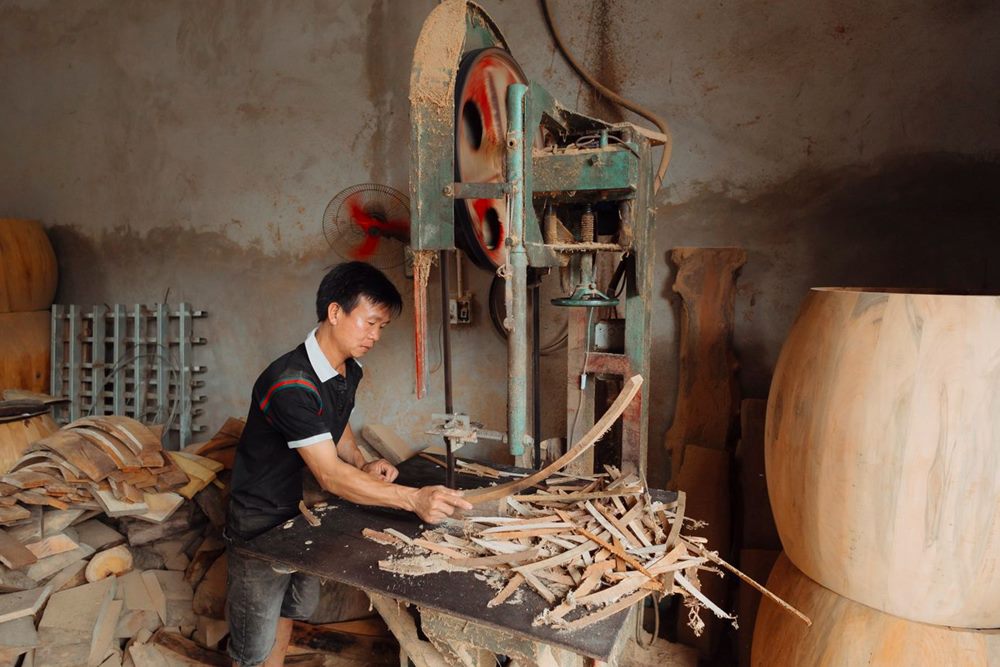
Most people meet a bed frame twice: once as a flat cardboard box that two people carry up the stairs, and once as the thing they sleep on for the next decade. Everything that happens between those two moments, the part that decides whether the frame stays silent for ten years or starts to creak in six months, takes place on a factory floor that almost no customer ever sees.
I run production and quality control at DICTAC, which means I spend most of my week on that floor. Here is the walkthrough I wish every buyer could take in person. We are going to follow a single twin loft bed from a pallet of raw steel tube to the sealed box on a delivery truck, stopping at each of the eight stages that turn one into the other. Along the way I will point out the decisions that separate furniture built to last from furniture built to hit a price, because those decisions are invisible in a product photo and obvious the first time a nine-year-old climbs the ladder.
Why metal, and why it changes everything downstream
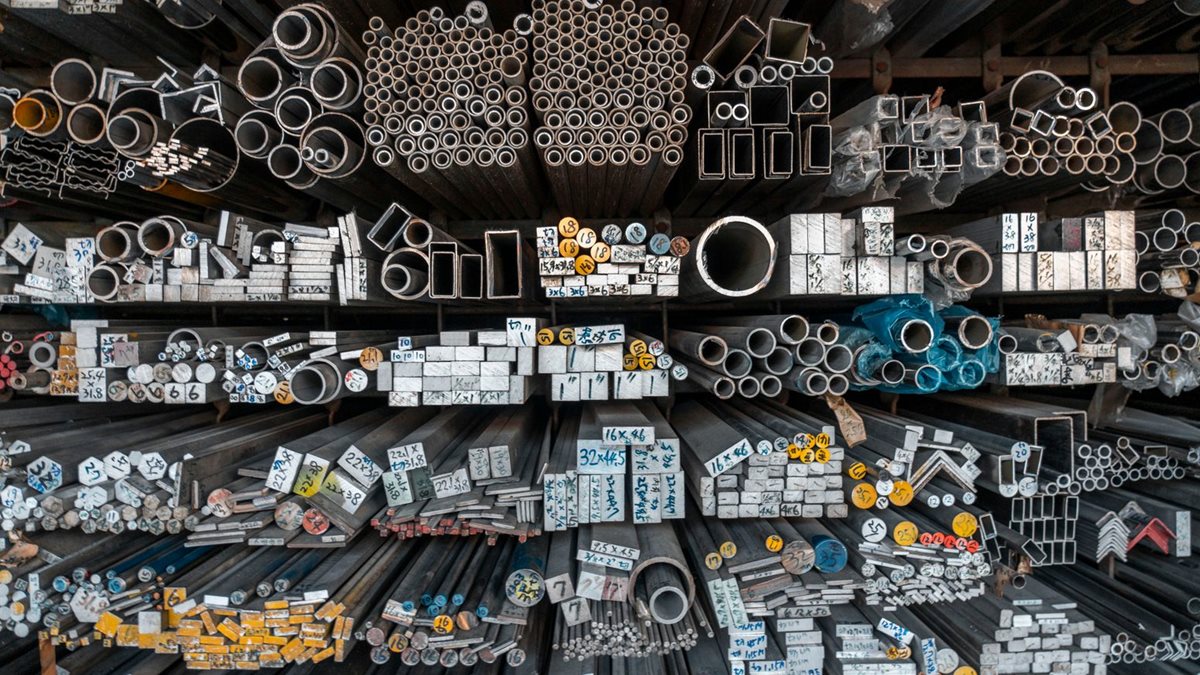
Before the walkthrough, it is worth being clear about the choice that sits underneath all of it. A bed frame can be built three broad ways: solid wood, engineered board with dowels, or a steel frame with board panels. Each has a place. But for the kind of furniture we make, loft beds a child climbs, bunk beds that carry two sleepers, platform beds with drawers rolling in and out thousands of times, the frame that takes the load is steel, and that single decision shapes every stage that follows.
Wood is forgiving to machine and beautiful to look at, but a wooden joint under repeated stress works loose; anyone who has re-tightened a wobbly wooden bunk knows the feeling. Particle board held together with cam locks and dowels is cheap and fast. Hence so much flat-pack furniture uses it, but it has almost no tolerance for being taken apart and rebuilt, and it sags under a sustained load. Steel tube, welded at the joints, does not care that a teenager sits on the edge of the bed every day or that the drawer gets yanked instead of pulled. That durability is the whole point. The catch is that steel is unforgiving to work with: you cannot sand out a mistake or fill a bad cut. Every stage has to be right the first time. It is why the process below is as much about checking as it is about making.
A wooden joint under stress works loose. A welded steel joint either holds or it doesn’t, and if it doesn’t, we want to find that out in our building, not yours.Marcus Reed, Production & QA
Stage one: material intake and the boring paperwork that matters
A production run starts on a loading dock, not a workbench. Steel tube arrives in bundles, engineered board arrives shrink-wrapped on pallets, and the hardware, bolts, cam locks, glides, LED strips, charging modules, arrives in labelled cartons from suppliers we have used for years. The first job is the least glamorous one in the whole building: checking that what arrived is what we ordered.
That means measuring the wall thickness of the steel tube with a gauge, not trusting the label. Steel is sold by nominal dimension, but the wall thickness, how much metal is actually there, is what determines how much weight the finished frame can carry. A tube that is a fraction of a millimetre thinner than spec looks identical and costs the supplier less, and it is exactly the kind of substitution that turns a 300-pound weight rating into a marketing number. We reject the batch if it does not measure up. The board gets checked for moisture content and for how cleanly it has been cut, because board that arrives damp will warp after it is edge-banded, and a warped drawer front is a complaint waiting to happen.
None of this shows up in a product listing. But it is the first fork in the road between a frame that meets its published rating and one that just claims to. When we say on a platform bed product page that the slats are heavy-duty, this is the stage where that stops being a word and starts being a measurement.
| Material | What we check on intake | Why it matters |
|---|---|---|
| Steel tube | Wall thickness, straightness, mill finish | Sets the real weight rating; thin wall = flex and sag |
| Engineered board | Moisture content, cut accuracy, density | Damp or loose board warps after banding |
| Fasteners | Grade stamp, thread fit, coating | Wrong-grade bolts shear under load |
| Drawer glides | Cycle rating, smoothness | Cheap glides bind within a year |
| LED / charging parts | Voltage, safety marks, batch code | Traceability if a component ever fails |
Stage two: cutting to length, where a millimetre compounds
Once material passes intake, the steel tube is cut to length. This sounds trivial and is not. A loft bed has dozens of tube segments, and every one of them has to be cut to a tolerance measured in fractions of a millimetre, because errors compound. If four vertical posts are each a millimetre too short in a different spot, the top bunk sits very slightly out of square, and a frame that is out of square is a frame that racks. It leans a little under sideways force, and over months that lean works the joints loose. The customer never sees the millimetre. They feel it two years later as a wobble.
Board is cut on panel saws and then edge-banded, which means a thin strip of matching material is heat-glued around the raw cut edge. Edge-banding is partly cosmetic, but it is mostly protection: an unbanded board edge chips the first time it is knocked and soaks up moisture from a damp room. Run your thumb around the edge of a drawer front on a well-made piece and you will feel a smooth, sealed lip. Do the same on the cheapest flat-pack you can find and you will feel bare, slightly rough chipboard. That difference is one machine pass and a few cents of banding, and it is one of the clearest tells of whether a manufacturer cut a corner.
Stage three: forming and welding: the stage that defines the frame
This is the heart of it. Cut tube is bent into shape on forming machines, the curves of a headboard, the right angles of a bunk frame, the L of a corner bed, and then the pieces are welded together at the joints that carry load. If you remember one thing from this whole walkthrough, make it this: the welds are the frame. Everything else is panels, drawers and lights hung off a welded steel skeleton. If the skeleton is sound, the furniture is sound. If it is not, no amount of nice upholstery will save it.
A good weld penetrates the full thickness of both tubes and leaves a clean, continuous seam. A bad weld — rushed, or done at the wrong temperature, sits on the surface like a bead of glue, looking fine until the day it cracks under a shock load. You cannot tell the two apart from a photograph, and often not from three feet away. This is why, on load-bearing joints, our welds are inspected by hand rather than signed off by a machine that only counts throughput. An inspector looks at the seam, checks the penetration, and taps the joint. It is slow, it is boring, and it is the single most important quality decision in the building.
Here is the uncomfortable economics of it: welding well is expensive, because it is slower and it needs skilled people. A factory under price pressure speeds this stage up first, because a weak weld does not show up in the showroom or the unboxing video. It shows up eighteen months later in someone else's bedroom, long after the sale is banked. That delay is precisely why this stage is where trust is either earned or quietly spent. When we talk on our about page about testing to the weight ratings we publish, the weld is the joint we are testing.
You can’t photograph a good weld. That’s the whole problem with quality in this industry: the part that matters most is the part the customer can never see.Karen Wells, Structural Engineering
Stage four: drilling, tapping and the tyranny of the hole
With the frame welded, it goes to drilling and tapping, making the holes and threads where bolts, cam locks and fittings will go. The demand here is brutal consistency. Every hole has to land in exactly the same place on every unit, because our furniture is flat-packed and assembled by the customer with a printed booklet. If a bolt hole on unit number 400 sits two millimetres off from where the instructions and the pre-drilled panel expect it, the customer cannot get the bolt in, and a frustrating assembly becomes a one-star review and a support ticket.
This is why the holes are drilled on jigs, fixtures that hold the frame in exactly one position so the drill hits the same coordinate every time, rather than marked out by hand. The goal is that the twelfth bed off the line and the twelve-hundredth bed off the line are dimensionally identical, so the instructions that worked for the first customer work for every customer. When assembly goes smoothly, this invisible stage is why. When people say a flat-pack "just went together," they are complimenting a jig they will never see.
Stage five: surface prep and powder-coating
Now the frame gets its finish, and this is a two-part job where the first part is the one that matters. Before any colour goes on, the steel is degreased and cleaned. Skip or rush that cleaning and the coating has nothing to properly bond to; it will look perfect leaving the factory and start flaking at the corners within a year. The prep is unglamorous and invisible and it is the difference between a finish that lasts and a finish that fails.
Then comes powder-coating, which is worth understanding because it is genuinely better than the painted finish on cheaper frames. Instead of spraying wet paint, the frame is coated with a dry powder that is given an electrostatic charge so it clings evenly to every surface, including the awkward inner corners a spray gun struggles to reach. The coated frame then goes into an oven, where the powder melts and cures into a hard, continuous shell bonded to the metal. The result resists the chips and scratches that everyday life throws at a bed far better than paint does, and it matters most exactly where you would expect, on the ladder rungs, the guardrails and the drawer edges that get touched every single day.
| Finish type | How it’s applied | How it holds up |
|---|---|---|
| Wet paint | Sprayed on, air-dried | Chips at edges, shows wear within a year or two |
| Powder-coat | Electrostatic dry powder, oven-cured | Hard bonded shell; resists chips and scratches |
| Bare / plated steel | Minimal or no top coat | Fine indoors short-term; can mark and corrode |
Stage six: sub-assembly of the parts you actually touch
A frame is a skeleton. Stage six is where it gets the parts a customer interacts with every day: drawers get their fabric liners and their glides; guardrails are wrapped in upholstery; LED strips and charging modules are fitted and tested; shelves and pegboards are prepared. These components are the difference between a metal frame and a piece of furniture that earns its floor space, and they each have their own small quality trap.
Take drawer glides. A drawer that rolls smoothly out of the box but binds after a year is almost always a glide that was under-specified to save money. We cycle-test glides — open and close them thousands of times on a rig, before a design is approved, so we know roughly how many years of daily use they will take. Or take the upholstered guardrail on a kids' bed: the point of wrapping a steel rail in soft linen is that a child's knee or elbow meets fabric, not a hard edge, so the foam density and the fabric's abrasion resistance are not decoration, they are the safety feature. The charging modules and LED strips are standardised across our range on purpose, so that if one ever fails we know exactly what it is and can send a replacement part rather than asking someone to bin a whole bed.
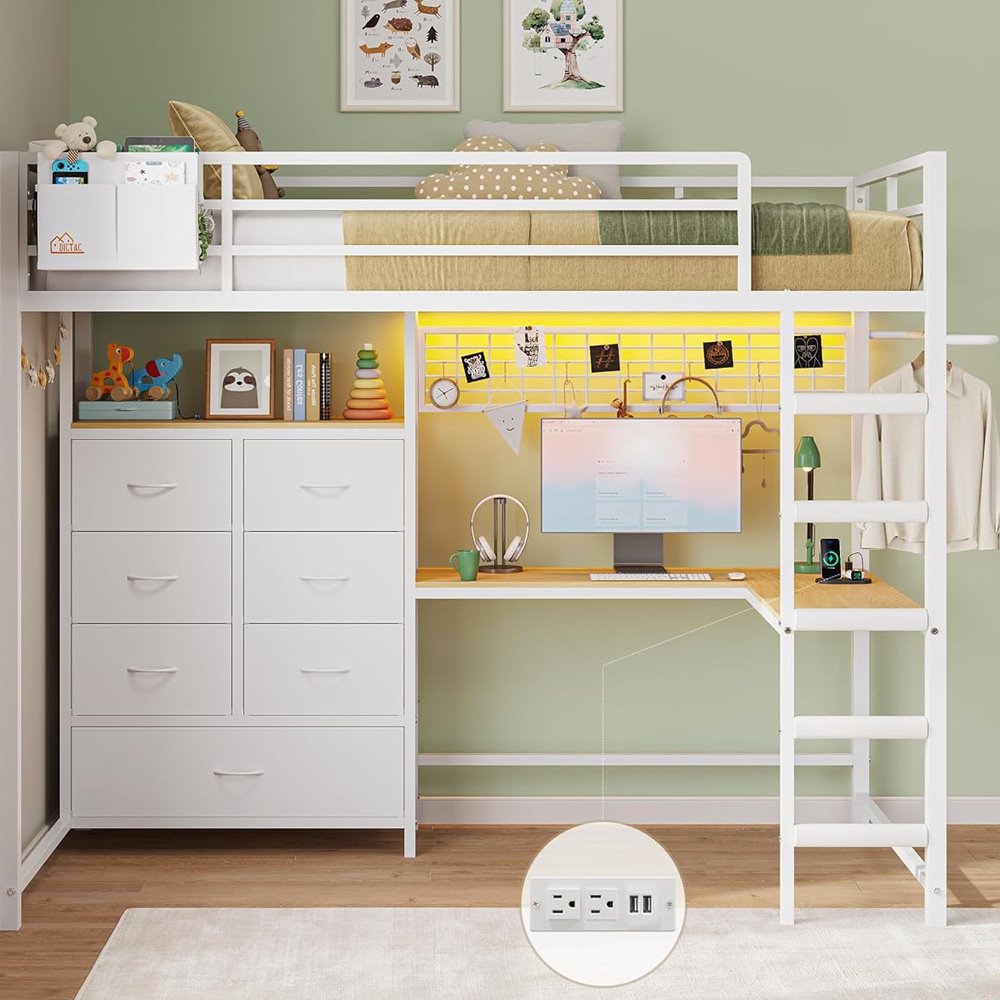
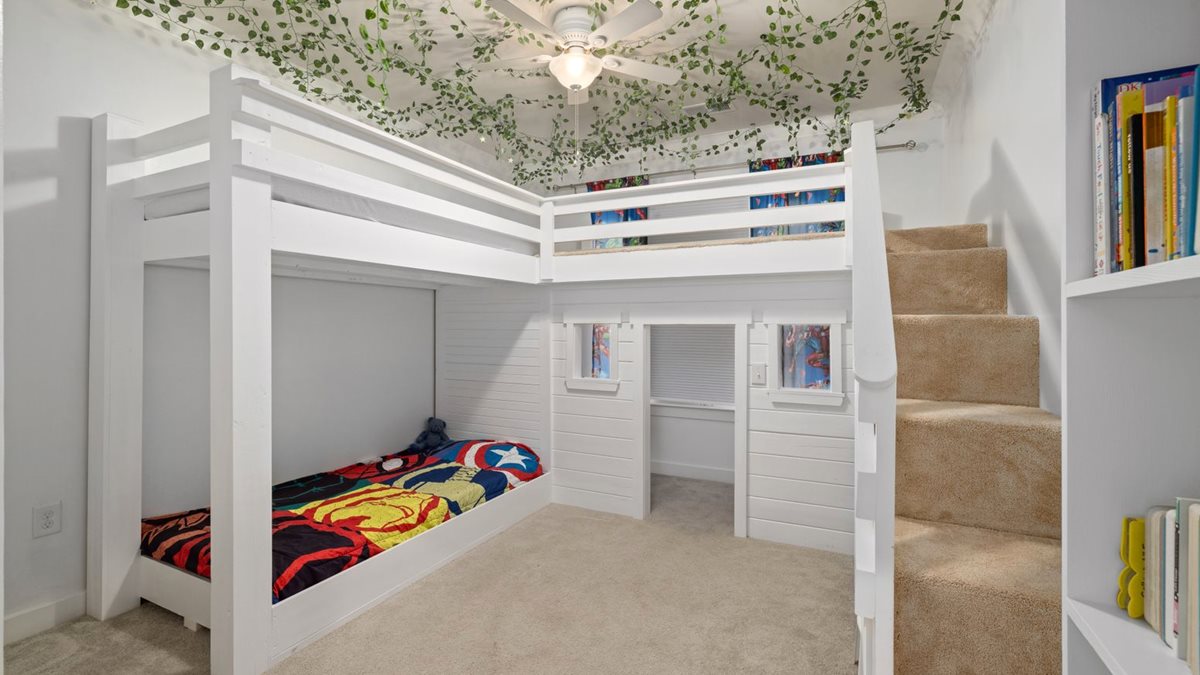
Twin Loft Bed with L-Shaped Desk & 7 Storage Drawers
A frame where stage six does a lot of work: seven fabric-lined drawers, a built-in LED strip, a charging station and a pegboard, all sub-assembled and tested before the bed is packed.
View details & specs →Stage seven: the full test build (the stage cheap furniture skips)

This is my favourite stage and the one I would defend hardest in a budget meeting. Before a production run is cleared to ship, sample units from that run are taken to a bench and fully assembled, exactly as a customer would assemble them, from the flat-pack parts and the printed instructions. Then they are loaded, pushed, and checked: does the frame sit square, or does it rack? Do the drawers align and roll, or does one front sit proud? Does the guardrail sit at the right height? Does the ladder feel solid underfoot? Do the bolt holes line up with the instructions without a fight?
A full test build is slow and it consumes a finished unit. That is the reason the furniture at the very bottom of the market skips it — they inspect parts, not assembled beds, and they let the customer's living room be the test bench. The trouble is that some faults only appear on assembly. A hole that is fractionally out, a drawer front that needs re-aligning, an instruction step that reads clearly to the person who wrote it but confuses everyone else: none of those show up while the parts sit in a box. They show up when someone is an hour into a build with a toddler asking why the bed is in pieces. Catching them here, on our bench, is the entire point. The test build is also where our instructions get better: a step that trips up our own builders is a step we rewrite before it ever ships. It is why newer models genuinely go together more easily than the ones we made five years ago.
The bottom of the market lets your living-room floor be the test bench. We would rather find the problem on ours: it’s cheaper for everyone in the end, especially you.Marcus Reed, Production & QA
Stage eight: packing, because a great frame can still arrive broken
The last stage is packing, and it decides whether all the work upstream survives the journey. A frame can be flawless and still arrive as a one-star review if it was thrown in a box with no thought. Flat-pack furniture takes a genuine beating in transit, dropped, stacked, driven over rough roads, so panels are protected at the corners where impacts land, the numbered hardware is bagged so nothing rattles loose, the tools are included so nobody is hunting for an Allen key, and the instruction booklet goes in on top.
The numbering matters more than it sounds. When hardware is bagged and labelled to match the instruction steps, assembly becomes a sequence anyone can follow. When it is all thrown in one bag, the customer is doing a sorting puzzle before they can even start. It is a small, cheap decision that shapes the first hour someone spends with our furniture: the hour that decides whether they will ever recommend it.
A closer look at weight ratings, and why most of them are fiction
Since I have mentioned weight ratings three times now, they deserve a section of their own, because they are the most abused number in this industry. A weight rating is a promise: this frame will safely hold this much. The problem is that there is no universal, enforced way that number has to be arrived at, so two frames can both say "800 lbs" on the box while meaning completely different things.
A rating done honestly comes from a load test. You take a finished, assembled frame, you apply weight to it in a controlled and repeatable way, often well beyond the stated number to build in a safety margin, and you measure whether it deforms, and by how much, and whether it recovers. You test the static case, a person lying still, and you think about the dynamic case, a child jumping, which puts far higher instantaneous force through the joints than the sleeper's bodyweight alone. A rating done dishonestly comes from a spreadsheet, or worse, from copying whatever the competitor down the page wrote. Nothing is physically tested; the number is chosen because it sounds reassuring.
You cannot fully tell these apart as a buyer, but there are tells. A suspiciously round, suspiciously high number ("holds 1,000 lbs!") on a lightweight frame is a flag. A rating that is specific and a little modest is more likely to be real, because a maker who actually tested is stating what they measured, not what markets well. And the frames that carry the most credible ratings tend to be the ones where the maker also talks openly about welds, steel gauge and testing, because those are the things a real rating depends on. Our bunk beds and loft beds carry ratings that come from the load bench. It is why we are comfortable putting children on the top bunk of them.
A weight rating is only as honest as the test behind it. If a maker won’t tell you how they arrived at the number, treat the number as decoration.Karen Wells, Structural Engineering
What actually goes wrong, and how to read the warning signs
It is easy to talk about quality in the abstract. It is more useful to talk about specific ways a bed frame fails, because each failure traces straight back to a stage in the process, and each one has an early warning sign you can learn to notice. Here are the four we see most often when we examine returned furniture: ours and, occasionally, a competitor's that a customer sends us photos of.
The creak. The most common complaint about any bed is a creak or squeak that develops over months. It almost always comes from a joint that is working: micro-movement between two parts that should be locked solid. On a welded steel frame that usually means a bolted connection has loosened as the frame settled. Hence we tell people to re-torque the main bolts after the first week and once or twice a year after. On a cheaper frame it can mean the joint itself was never solid: a weld that only ever touched the surface, or a wood joint that has begun to open. The early warning is a faint tick under movement that you can feel through the mattress before you can hear it. Catch it early, tighten the bolts, and it usually never becomes a real noise.
The rack. Racking is when a frame leans slightly out of square under sideways force: you push the headboard and the whole frame parallelograms a few millimetres. A little is normal; a lot means the frame geometry is off, usually from cutting or drilling tolerances that were too loose (stages two and four). Racking is corrosive because every lean works the joints, so a frame that racks noticeably when new will loosen faster over its life. The test is simple: assembled, give the top of the frame a firm sideways push. It should feel planted, not springy.
The drawer that stops rolling. A drawer that glided beautifully for the first months and now drags or tips as you pull it is a glide problem, and glide problems are specification problems from stage six. Good glides are rated for tens of thousands of cycles and stay smooth; under-specified ones bind, sag, or pop out of their track once the novelty wears off. There is not much a customer can do to fix a genuinely cheap glide. That is the reason this one is worth getting right at purchase rather than hoping.
The finish that flakes. Coating that chips or peels at the corners and high-touch edges within the first year points straight back to stage five: either the surface was not properly cleaned before coating, or a thin paint was used instead of a cured powder-coat. Once it starts it spreads, because each chip exposes bare metal that the next knock widens. There is no real repair; it is a manufacturing shortcut you live with. The good news is that it is one of the easier things to avoid by buying a powder-coated frame in the first place.
| Failure | Traces back to | Early warning sign | Preventable by |
|---|---|---|---|
| Creak / squeak | Loose or shallow joint | Faint tick under movement | Solid welds + re-torquing bolts |
| Racking / lean | Loose cut & drill tolerances | Springy sideways push when new | Tight tolerances, jig drilling |
| Drawer drag | Under-specified glides | Drawer tips or binds when pulled | Cycle-tested glides |
| Flaking finish | Poor prep or thin paint | Chips at corners in year one | Proper prep + powder-coat |
Where the materials come from, and why it isn’t only about cost
A question we get more often now than we used to is about sourcing: how the furniture is made is only part of it. where the materials come from and whether the making is responsible. It is a fair question and the honest answer has a few parts. Steel is a globally traded commodity, and the meaningful choice is not really country of origin but grade and consistency: buying to a spec and rejecting anything that does not measure up, run after run, rather than taking whatever is cheapest that month. A stable supplier relationship, which we have deliberately built over years, is worth more for consistency than chasing the lowest quote and getting a different tube each time.
The engineered board that makes up shelving, drawer fronts and panels is where the responsible-sourcing question bites hardest, because board can be made from responsibly managed timber or from whatever is cheapest, and it can be low-emission or it can off-gas. The board worth buying is made from responsibly sourced wood fibre and meets low formaldehyde-emission standards. The thing you are trusting when a piece of furniture sits in a child's bedroom and you never think about the air. This is not visible in a product photo either, which is a running theme of this whole article: the decisions that matter most to how furniture lives in your home are precisely the ones a catalogue cannot show you.
There is also a quiet environmental argument for building things to last, which is the entire philosophy behind how we work. A frame that survives a childhood and gets handed to a younger sibling is, in the most practical sense, the sustainable option. It is one frame instead of three. Furniture built to hit a price and fail in two years is not cheap in any meaningful accounting; it is just cheap at the till. The most environmentally sound thing a furniture company can do is make something good enough that nobody needs to replace it soon, which happens to also be the thing that makes customers trust you. Those incentives point the same way, which is a rare and pleasant thing in manufacturing.
What all of this means when you’re choosing a bed
You will never watch your specific bed being made, so the practical question is: how do you read the stages you cannot see from the things you can? A few of the invisible decisions leave visible fingerprints, and they are worth knowing.
Run your thumb along a drawer edge: sealed edge-banding tells you stage two was done properly. Open and close a drawer if you can. A smooth, quiet roll points to a glide that was specified for the long haul, not the showroom. Look at whether guardrails and anti-tip kits are included as standard rather than sold as an add-on, because a manufacturer confident in stage seven includes the safety parts by default. And read what a brand says about testing to its published weight ratings; a real rating comes from a load test, a fake one comes from a copywriter. On every one of our product pages the specifications reflect the stages above, not a wish list.
| What you can check | What it tells you about the hidden stages |
|---|---|
| Edge-banding feels sealed and smooth | Board was cut and banded properly (stages 2) |
| Drawers roll smoothly and quietly | Glides were specified and cycle-tested (stage 6) |
| Powder-coat finish, not thin paint | Surface prep and coating done right (stage 5) |
| Guardrails / anti-tip kits included as standard | Maker is confident in its safety and test build (stage 7) |
| Published, specific weight rating | Frame was load-tested, not copywritten |
| Bagged, numbered hardware + clear instructions | Packing stage was taken seriously (stage 8) |
The reason we build the way we describe here is simple and slightly selfish: it is the standard we would want as customers ourselves, and it is far cheaper to get a frame right on our floor than to replace it after it fails on yours. If you want to see the specific frames these eight stages produce, the full DICTAC range is the place to start, and the companion guide to materials and quality goes a level deeper into the steel, board and hardware themselves. If you are weighing up which type of frame suits your room, our comparison of loft, bunk, corner and platform beds is the natural next read.
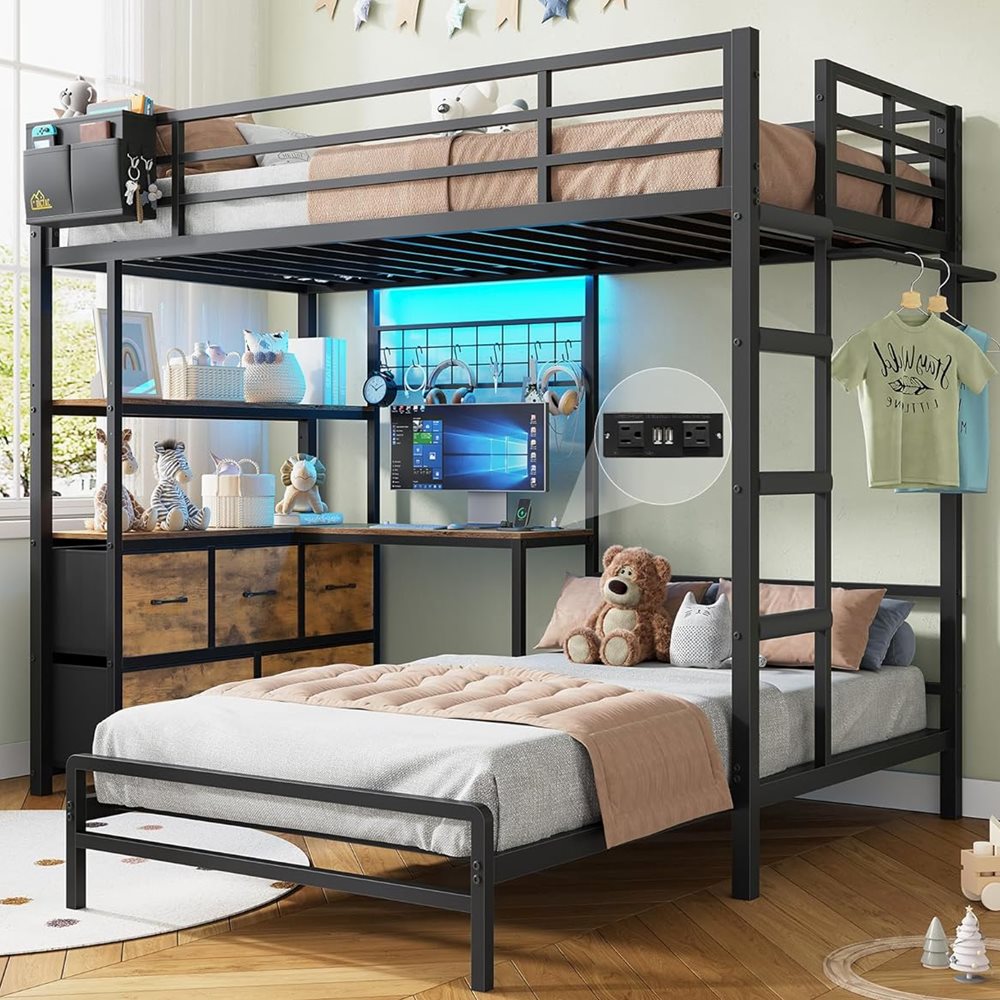
Bunk Bed with L-Shaped Desk, 5 Drawers & 2 Shelves
A bunk is the ultimate test of stages three and seven: two sleepers, a shared desk, and welds that have to hold up to years of climbing. This is the frame we point to when people ask whether our process actually shows.
View details & specs →Frequently asked questions
Is a metal frame really better than solid wood?
Not universally. A well-made solid-wood bed is a lovely thing. But for furniture that takes repeated stress and gets assembled and sometimes reassembled by the customer — loft beds, bunks, storage platforms, a welded steel frame holds its geometry better over time than a wooden joint, which tends to work loose. For our kind of space-saving, load-bearing furniture, steel is the right structural choice. Where wood shines, we use engineered board for the panels and surfaces, so you get both.
Why is flat-pack furniture built this way at all: wouldn’t pre-assembled be better?
Pre-assembled furniture is enormously more expensive to ship and far more likely to arrive damaged, because you are paying to transport mostly air and every knock in transit lands on a finished piece. Flat-packing lets us ship efficiently and lets the frame arrive intact; the trade-off is an hour or two of assembly. The way we manage that trade-off is by making the assembly as painless as possible: jig-drilled holes that line up, numbered hardware, clear instructions, and a test build that catches confusing steps before they ship.
How long should a well-made bed frame last?
A frame built to the standard described here should comfortably last a decade of daily use, and our kids' and bunk frames are specifically built to survive a childhood and be handed down. The things that shorten a frame's life are almost all preventable: never re-torquing the bolts, overloading beyond the rated weight, or buying a frame that cut corners at the welding or coating stage in the first place.
What’s the single best thing I can do to make my frame last?
Re-torque the main structural bolts after the first week and then once or twice a year. A new frame settles slightly as it beds in, and a bolt that has crept even a little is the beginning of every creak and most racking. Five minutes with an Allen key, twice a year, genuinely adds years to the quiet, solid feel of a bed. Our assembly and care page has the full routine.
Where can I see the specifications for a specific bed?
Every frame on the site has its own product page with the size, frame material, storage layout, guardrail heights and included extras. Browse the full range, or narrow down by type: loft beds, bunk beds, corner beds, platform beds, kids' beds and storage. If a spec you need isn't listed, our support team will get it for you.
Marcus Reed
Production & QA · DICTACPart of the team behind DICTAC’s space-saving beds and storage. Read more about how we work, or browse the full range.